Branding
Design

Self-Care Shirts

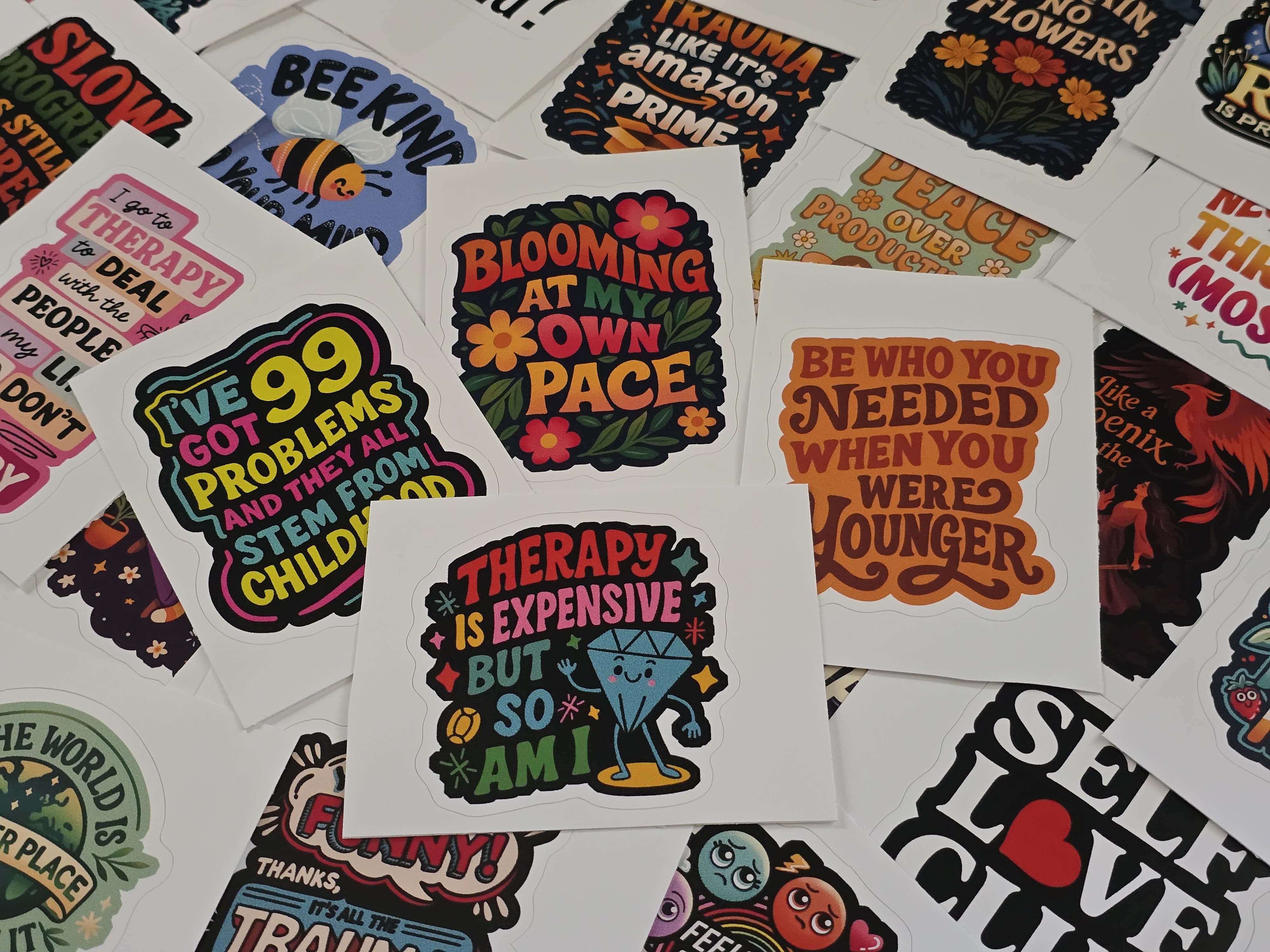
Self-Care Shirts hand-drawn mental health apparel brand
Client
Self-Care Shirts
Year
2025–present
My role
Founder — illustrator, brand designer, web designer & developer, copywriter, marketer
Sector
Ecommerce · Mental health
Services
Brand identity, 50+ hand-drawn product designs, custom Shopify theme design and build, paid user-testing program, SEO and structured data, email and paid acquisition, content strategy, free mental health resource library
Page one of Google at a domain authority of 10, 4.96 from 159 reviews, $3,394 donated — every discipline run by one person.

The brief

Self-Care Shirts is the project where I'm the client, and the brief I wrote myself was simple to say and hard to do: build a mental health apparel brand where the conversations start naturally — because someone saw a shirt, a sticker, or a drawing and felt understood. Every design hand-drawn. Every order supporting the 988 Lifeline and The Trevor Project. And every discipline — illustration, brand, web, copy, SEO, email, paid ads, customer service — done by one person, because there is no team.

It's also the project where I can show my work all the way down, because nobody was watching over my shoulder except the market.
Why it was hard

  • The subject is a wound, and the medium is a t-shirt. Mental health apparel can go wrong in a hundred ways — trivializing, trauma-dumping, or preaching. Every design has to land as permission, not prescription. The voice took years to calibrate: warm, matter-of-fact, wit pointed at myself and never at the wearer.
  • Ad platforms restrict the category. Meta classifies mental-health-adjacent products under “personal hardships” and limits their delivery. I had to build an acquisition system that stays honest to the brand and survives policy — including knowing which restrictions to accept rather than write around.
  • An unknown brand asking strangers for their credit card. No retail presence, no team, competing against faceless drop-shippers — trust had to be designed, not assumed.
  • “Is this AI?” Hand-drawn work now gets accused of being generated — the exact opposite of the brand's premise. The proof existed; it had to be made visible.
  • Commerce and care pull in opposite directions. A crisis resource next to a buy button is a design problem most brands never have to solve. Getting the donation model, the free resources, and the store to feel like one coherent act — not a store wearing a cause — was the hardest brief inside the brief.

What I did

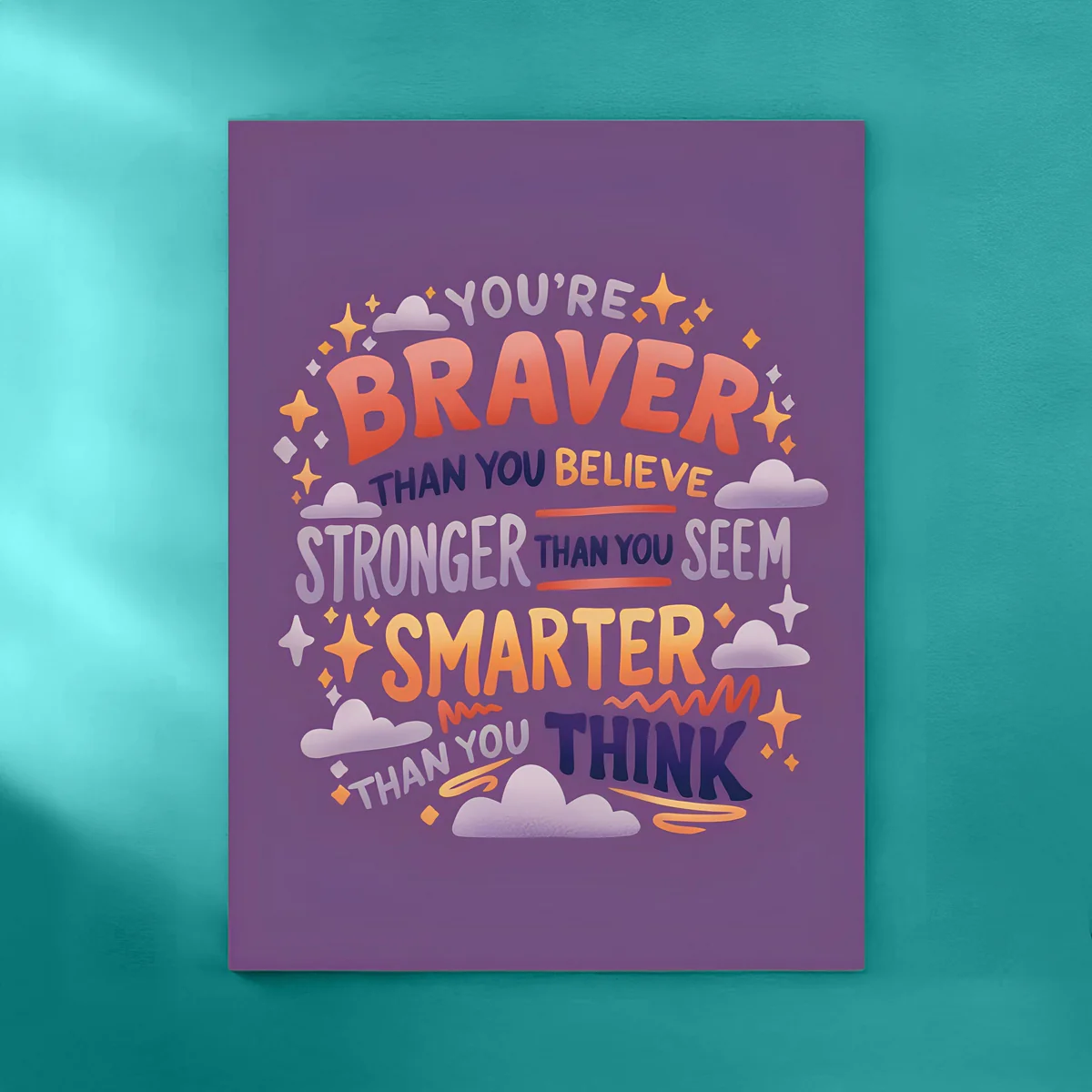
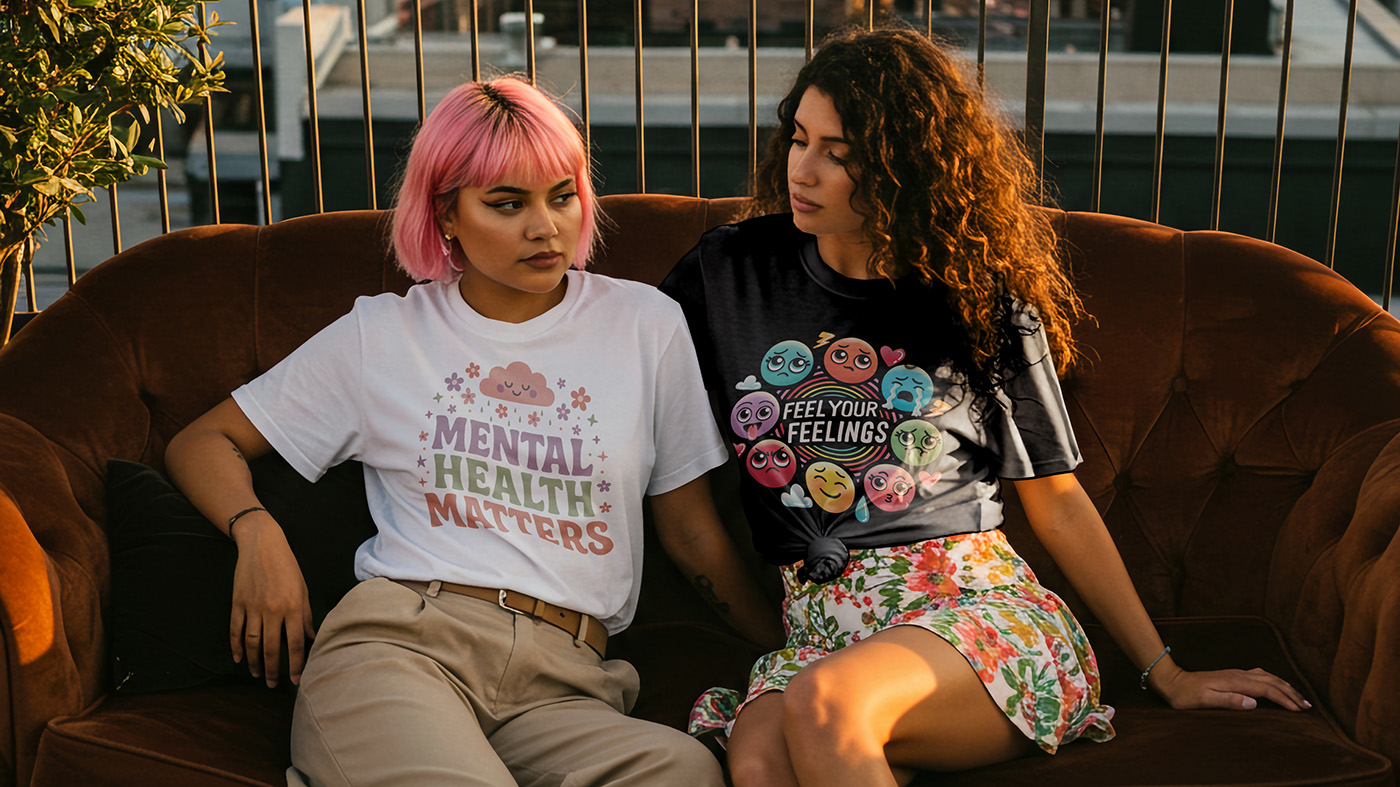
  1. Drew the catalog. 50+ original designs, every one by hand — apparel, stickers, and prints, organized around feelings rather than product types.
  2. Built the voice before the store. A brand language of permission-giving and self-directed wit, carried through products, email, and Healing Out Loud — the blog where I publish two personal essays a week on mental health and running a business of one.
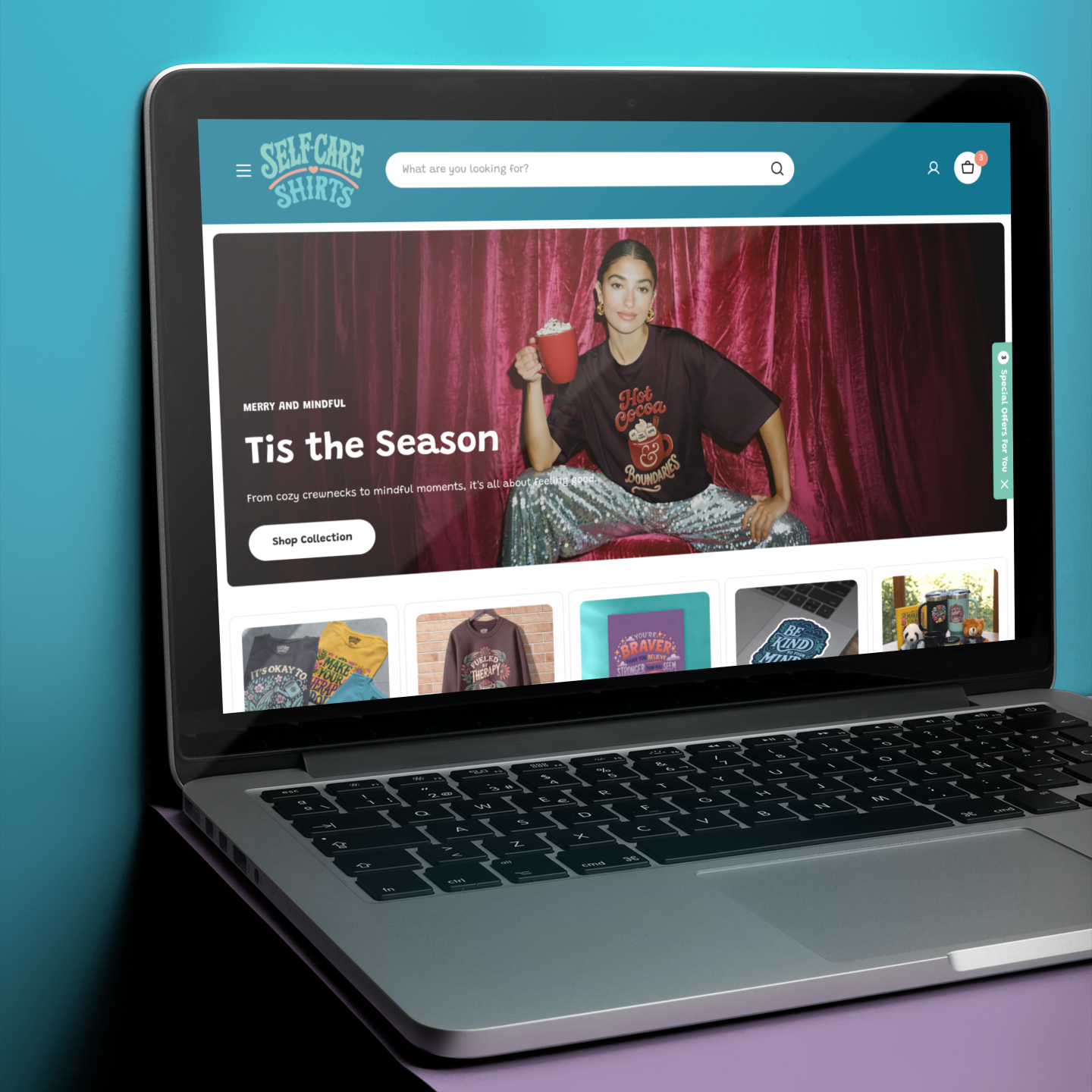
  3. Designed and hand-built a custom Shopify theme. Not a template: a product page with a “get this design as” format switcher, collection pages filterable by feeling, a flat-goods template, and a custom cart drawer — built for how people actually shop for meaning, not SKUs.
  4. Paid eight strangers to tear it apart. Before launch I commissioned a paid user-testing panel with one instruction: tear it apart. They found twelve real issues — including a color-swatch bug that was silently killing sales. I fixed all twelve in forty-eight hours and shipped. Every tester said they'd trust the site with their card; all eight independently cited the same trust signal — the section where I say it's just me.
  5. Did the unglamorous technical work. Consolidated three competing structured-data voices into one clean schema stack, added FAQ and breadcrumb markup, and rebuilt the Google Merchant Center feed to a 98.7% product approval rate.
  6. Built the free side of the brand. A mental health resources hub — hand-drawn printables, a 30-second check-in tool that stores nothing, guided breathing and body-scan videos, and a group facilitation guide — free, no email required. It's the brand's service arm and its most-linked asset.
  7. Made the hand-drawn provable. Turned the “is this AI?” accusation into a trust asset: timelapse videos of designs being drawn, start to finish, now running on product pages and in ads.
  8. Ran acquisition like a CFO. Contribution-margin math, a true break-even ROAS, two-week judgment windows, and the discipline to cut what doesn't clear the bar — including my own favorite campaigns.
  9. Made the mission auditable. Every order supports the 988 Lifeline and The Trevor Project, with a public running total — donations as a receipt, not a marketing claim.

What changed

  • Page one of Google for “funny mental health shirts” — at a domain authority of 10, outranking sites with many times the backlink profile, on relevance and structure alone.
  • 159 reviews, 4.96 average.
  • 73%+ email open rates, twice running — a list that actually wants the mail.
  • Paid acquisition relaunched above break-even in week one, on math I can defend line by line.
  • Featured in nine outlets, including MSN and AZ Big Media.
  • $3,394 donated to the 988 Lifeline and The Trevor Project — and counting.
  • 5,313 reminders shipped. The brand counts units in reminders, not products — because that's what they are.
Reading your story made me trust you more.
Paid user-testing panelist, pre-launch review
Selected visuals
No items found.

Got something complicated?

That's the fun kind. Open to senior designer roles, and taking two freelance projects this quarter.

Related projects

Let's make something clearer than it was.

I'm Alyssa Ostroff — designer and brand strategist. Open to senior design and creative lead roles at mission-driven teams, and taking two freelance projects this quarter.
© 2026 The Nine Five Four, LLC, dba Alyssa Creative. Powered by caffeine. Lots and lots of caffeine.
Built accessibly, obviously.